
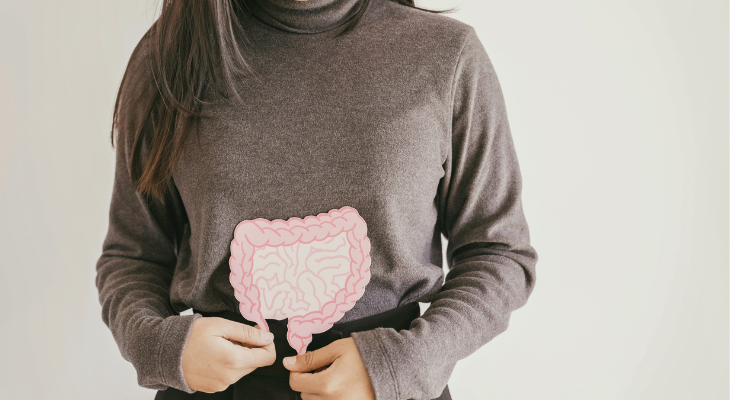
If I had to pick only one thing to help people with when trying to improve their health, digestion would undoubtedly be my first pick.
Why?
Because your ability to digest food has a dramatic impact on your overall health and wellness.
Think of it this way: You can have the healthiest diet in the world, full of nutrients, but if your digestion isn’t working optimally and you’re not actually able to absorb all those delightful nutrients, then all that healthy eating isn’t going to pay off.
In fact, not only will it not pay off, but you’ll also likely find that you are deficient in certain vitamins and minerals, which can have many downstream effects (i.e. lack of energy, mood instability, hormonal dysregulation, irregular periods—you name it and there is likely an element of poor digestion playing a role).
Plus, let’s not forget about all the concerns you might struggle with that are directly related to your digestion not functioning optimally—diarrhea, constipation, bloating, heartburn, gas, etc.
Blah, no fun.
So what’s a girl (or boy) to do?
Well, quite simply, you need to get your digestive system in a better place.
How should a well-functioning digestive system work
You don’t need to know every little detail about how your digestive system works, but keep in mind that knowledge is power. The more you know about how your digestive system works, the more likely you’ll be to make choices that support optimal digestion.
Digestion begins in the brain
When you think of your digestive system, you probably don’t think about your nervous system, but this is the first mistake people make when trying to improve their digestion.
When you don’t support “northern” digestion you miss the first stop in optimizing digestion and thereby put every other “southern” digestive process at a disadvantage. You have to support digestion at the level of the brain before you can move on to other players.
First, to support northern digestion, you need to eat in a calm and relaxed state. This is called the parasympathetic state, or your rest and digest state.
The opposite of a parasympathetic state is a sympathetic state, which is your stressed state. Eating in a stressed state can include eating on the go, eating standing up, eating while you work, eating in front of the tv, and/or eating while scrolling on your phone. Essentially, if you’re not eating in a calm and relaxed state where you can exclusively focus on the act of eating and enjoying your food, you’re putting yourself at a digestive disadvantage right from the get-go.
Chew your food
Next, we move on to the mouth. Here, chewing is the name of the game.
There are a couple of things that happen when you don’t chew your food:
- Your brain doesn’t get to fully sense the foods, so it doesn’t have the necessary information to make enzymes that digest food in the mouth (i.e. salivary amylase to digest starchy carbs).
- Rushing/inhaling your food is going to put you in a sympathetic state (see above).
- Keeping food in your mouth long enough sends signals to your brain to tailor digestion to exactly what you’re eating. This goes beyond just digestion, though. For example, your blood sugar regulatory systems and immune system receive signals about what you’re eating, but this is only possible when you actually savor and enjoy the food in front of you.
Ideally, try to chew your food 15-30 times so that it is the consistency of mush by the time you swallow it.
What happens in the stomach?
There are three major things that happen in the stomach
- The disinfection of food
- The breakdown of protein
- And the release of nutrients from the food ingested
Let’s go into a bit more detail about what this entails.
So, when food drops into the stomach, a hormone called gastrin is released, which tells the stomach cells to start producing hydrochloric acid (HCL). This only occurs when protein is present in the food, which is why it’s so important for high-quality protein to be a part of your diet.
In addition, there is also the release of pepsinogen, which is turned into pepsin (a protein-digesting enzyme) as long as stomach acid remains below 3.5.
So now we have a mix of HCL, pepsin, and bolus (your ingested food) all turning around in your stomach. This churning process is what enfolds the proteins, or allows the vitamins and minerals to be released. For example, B12 and calcium are released at this stage.
Let’s move on to the small intestine
We start our journey of the small intestine in the first section—the duodenum.
One of the first things that happen in this phase of the digestive process is the release of a hormone called secretin. This release occurs when the chyme (this is just a fancy word for the food ingested) is too acidic and burns. If this happens, secretin signals to the body to decrease the production of HCL, as well as to release bicarbonate from the pancreas. Bicarbonate is what cools the acidic chyme down to protect the duodenum.
There is another major player that joins the party in the duodenum called cholecystokinin (CCK)—a hormone that slows digestive emptying when fat and/or protein is present.
In addition, CCK triggers the release of bile from the gallbladder (bile is necessary for emulsifying fats), tells the pancreas to release enzymes, and signals to the brain that you are full (can you see why fat + protein are so important in a balanced diet?).
The chyme continues to move down the small intestine into the two other sections of the small intestine— the jejunum and ileum.
It is in these sections that most of the nutrient absorption occurs with the help of villi (finger-like projections that absorb nutrients). Here’s a breakdown of what is absorbed:
- Carbs are absorbed as simple sugars
- Proteins are absorbed as amino acids
- Fats are absorbed as fatty acids
- Fiber and resistant starch aren’t absorbed and instead move onto the large intestine
So, at this point, almost everything (minus fiber and resistance starch) should be absorbed. With that in mind, this last part of the small intestine (the ileum) is very sensitive to undigested macronutrients, and because of this will send messages to everything north to slow down if undigested food is present.
Now, we move to the large intestine
The digestive process is nearing completion and, as mentioned, almost all nutrient absorption has occurred (woohoo). Anything that remains is going to form into feces, which requires the assistance of your gut microbiome.
These gut bugs “eat” the fiber, resistant starch, and polyphenols. The result of this “eating” is the production of vitamins like K2 and B vitamins, as well as fatty acids like butyrate.
And now, we’re really at the end. Stool collects in the rectum until the urge for a bowel movement strikes, and voila, digestion!
Pretty wild, right? How all those steps working optimally, in the beginning, is what allowed everything else to function optimally. Remember, optimal digestion occurs when you support each phase of the digestive process, beginning with the brain and beyond.
How can I get my digestive system functioning optimally?
So now that you know how the digestive process works, you’re probably wondering what you can do to ensure that your digestive system is functioning in this optimal manner.
Well, first things first, we have to acknowledge that there will likely be a lot of trial and error necessary, as well as the potential support of a health professional like an NTP (you can read about my services here). Having said that, there are some things that you can easily start doing today to get your digestive system moving and groovin’.
- Eat in a parasympathetic/relaxed state. I can’t stress this enough
- Chew your food. Remember, to the consistency of mush
- There are a handful of things you need to produce stomach acid, but for now, let’s start by ensuring you’re eating adequate protein and you’re properly hydrating yourself (electrolytes or a pinch of sea salt in your water are helpful, too)
- Also don’t skip out on healthy fats like olive oil, avocado, grass-fed butter, and ghee. Remember, it is fat in the diet that triggers the release of CCK, which has a host of jobs, including telling your brain when you’re full.
- Are you getting enough vitamins in your diet? For example, B vitamins are extremely important for energy production (digestion takes a lot of energy). This is something that might require the support of a health professional, but in general, be sure that you’re eating a balanced diet that includes all the macronutrients. In addition, the more unprocessed foods you can eat like meat, eggs, dairy, fruit, vegetables, nuts, and seeds, the better (just keep food intolerances/sensitivities in mind—another area where working with a professional might be helpful). Anything that can cause dysbiosis should be avoided or eliminated (antibiotics, alcohol, NSAIDs, pesticides, etc.)
As mentioned, getting your digestive system in tip-top shape requires some effort, but at the same time, there are some really basic things (listed above) that can make a dramatic impact with minimal effort.
What will you be incorporating?
Leave a Reply